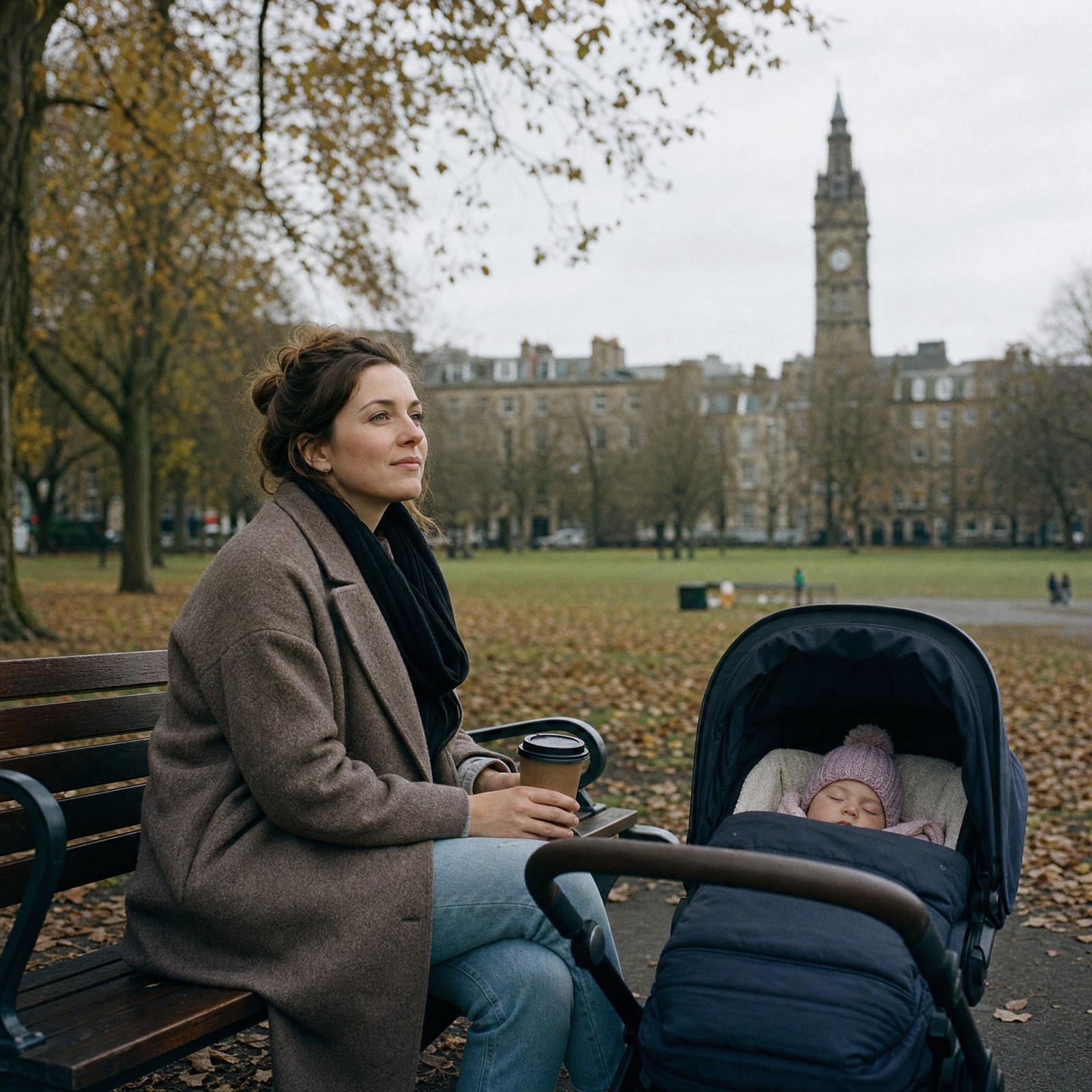
Kirsty was thirty-four when her son Roan was born, in a farmhouse on the edge of Doune, in November. Her partner works shifts at a facility near Stirling and leaves before seven most mornings. Her nearest neighbour is a ten-minute walk across a field. Her mother lives in Dundee.
"I had read all the books," she says, laughing a little now in a way she could not have managed six months ago. "I thought I was prepared. And then this tiny person arrived and nothing worked the way the books said it would, and I had no idea who to ask."
The health visitor came for the standard checks and was kind, but the visits were brief. The postnatal ward had given Kirsty a folder of leaflets, most of which she had not had time to read and several of which seemed to contradict each other. Roan was feeding constantly, sleeping in short bursts, and crying in ways she could not decode. "I kept wondering if I was missing something obvious that every other mother just knew."
In January she found a flyer for our Doune wellbeing session tucked into the noticeboards at the village hall. She almost did not come. The session started at ten, Roan had been awake since four, and the idea of getting both of them out of the door felt impossible. She came anyway.
"The first thing that struck me was that nobody pretended it was easy," she says. "The facilitator just said: this is hard, and it's hard for everyone, and that's why we're here. Something about hearing that said out loud in a room made me feel less like I was failing."
The session that morning focused on feeding cues and responsive feeding — how to read what a baby is communicating and respond to it rather than trying to impose a schedule. For Kirsty, who had been anxiously watching the clock between feeds, the shift in framing was significant. "It sounds simple, but being told to watch Roan rather than the clock actually changed how I felt. I stopped feeling like I was doing it wrong and started feeling like I was learning to read him."
She has been back to the Doune session every fortnight since. She has also become one of the informal ambassadors that our small programmes depend on — texting a friend in the village who had a baby in March, mentioning it to the woman she met at the pharmacy. "Rural areas can be incredibly isolating when you're a new parent," she says. "There's no baby café you can wander into. You have to know something exists before you can use it. So I just try to tell people."
Roan is seven months old now. He sits up, he eats mashed sweet potato with great enthusiasm, and he sleeps — not perfectly, but well enough. Kirsty is still coming to sessions, partly because she still has questions, and partly, she admits, for the tea and the company.
"I came in thinking I needed someone to give me the answers," she says. "What I actually got was the confidence to work out the answers myself. That feels more useful in the long run."
If you are a new or expecting parent in the Stirling area or in one of the surrounding rural villages, our sessions are free, informal, and open without referral. You do not need to have a specific concern to attend — curiosity and a baby are enough.