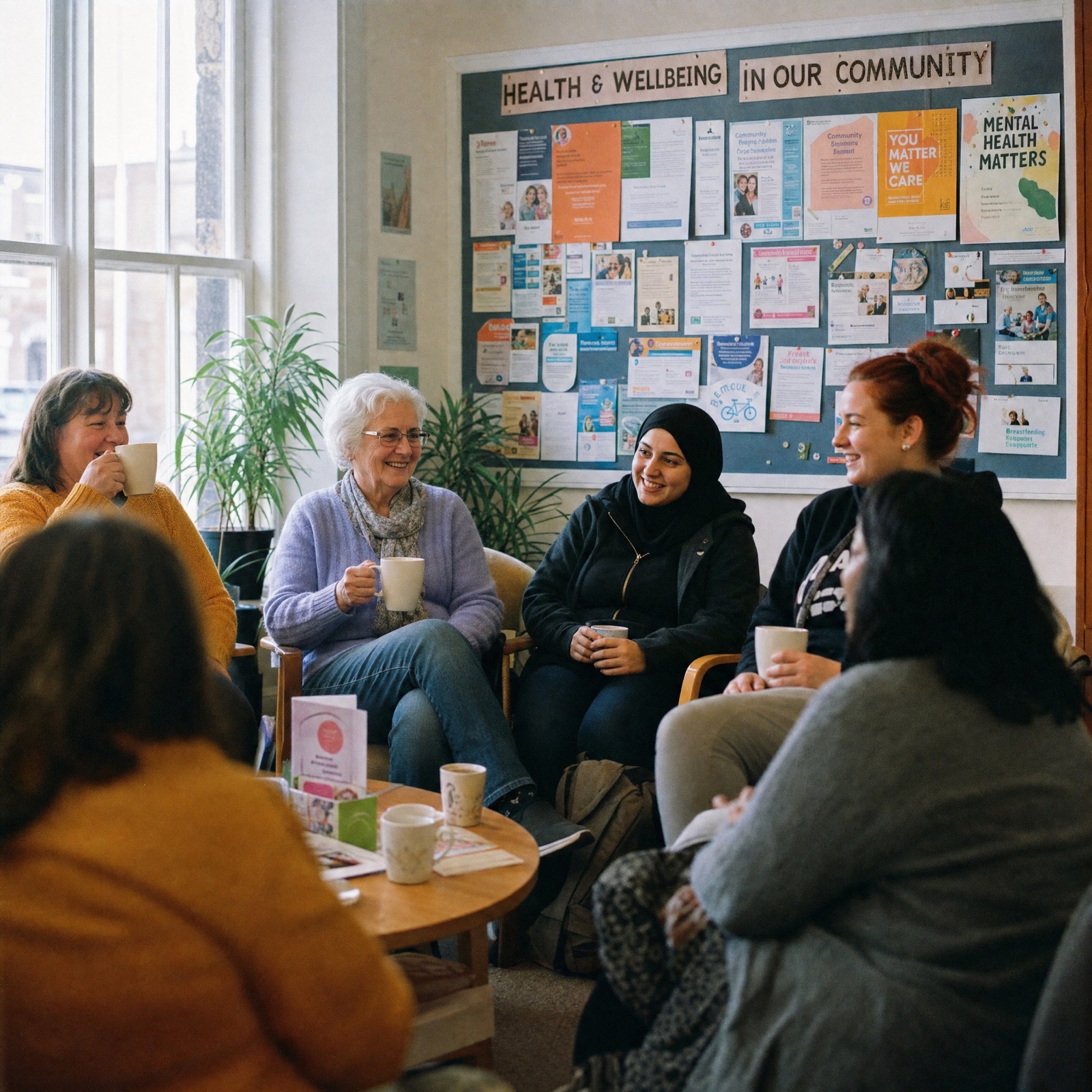
Walking into a room full of strangers with a baby on your hip and a head full of unanswered questions is daunting. That is exactly why we designed our baby wellbeing sessions the way we did — not as lectures, not as clinics, but as honest, unhurried conversations where no question is too small and no worry is dismissed.
Our sessions run fortnightly across Stirling and in several of the surrounding rural villages, including Doune, Dunblane, and Bridge of Allan. We deliberately kept the groups small — usually eight to twelve families — so that every parent gets time to speak and to listen. There are no PowerPoint slides, no handouts dense with statistics. Instead, a trained facilitator guides the group through whichever topics matter most to the people in the room that day.
Feeding comes up almost every session, whether a family is breastfeeding, formula-feeding, or somewhere in between. We do not push any single approach. What we do is help parents understand what they are seeing — what a good latch looks like, what a normal feeding pattern actually is in the early weeks, and what signs genuinely warrant a call to the health visitor versus what is simply a baby being a baby. That last distinction turns out to matter enormously to new parents, who often feel caught between under-reacting and over-worrying.
Sleep is the other topic that fills the room with knowing nods. We walk through the evidence on infant sleep without the jargon, because the research on safe sleep environments and realistic sleep expectations is genuinely reassuring when it is explained clearly. Parents leave not with a rigid schedule but with a framework they can adapt to their own child and household.
Developmental milestones — rolling, sitting, first words, social smiles — also come up regularly. Our facilitators are careful to present these as ranges rather than deadlines, and to explain what to watch for and when a conversation with a GP or health visitor would be worthwhile. That nuance is often missing from the one-page leaflets families receive at the six-week check.
At the end of every session there is tea, and there is time. Parents talk to each other. Friendships form. Someone who came in anxious about whether her baby was feeding enough sits next to someone who had the same worry three months ago and got through it. That peer connection is not a side-effect of our programme — it is part of the design.
If you live in or around Stirling and have a child under two, our sessions are free and no referral is needed. You can find upcoming dates and village locations by getting in touch with us directly, or ask your health visitor to point you our way.